The Development of Albina
Located in the northeast corner, Albina was originally a separate township, incorporated into the city of Portland in 1891. With the cities coming together, there was a small active Black community centered in Portland and Albina due to the Union Pacific Railroad employing many African Americans as yard workers and porters to operate Union Station in the early 1900s. While many of the railroad workers chose to live close to the station and in Albina, exclusionary laws arose throughout the 1920s and 1930s, which in turn regulated African Americans into only being able to buy homes in the Albina neighborhood. Stuart Mcelderry, in his journal article “Building a West Coast Ghetto,” writes that “[d]uring the 1920s, the Portland Realty Board’s new guidelines prevented blacks from moving beyond the east side neighborhoods…concentrated along Williams Avenue in the Albina District.” These racist restrictions would severely sharpen due to a massive shift in the demographic with an influx of African Americans moving to Portland with the beginning of World War II, targeting this new community in the city. Facing housing discrimination and the aftermath of a natural disaster, the Black community relied on the organizations and institutions within Albina.
As the Oregonian points out, however, with the massive influx of Black workers coming to work in the industrial shipyards, the city needed to come up with housing to support these workers. This task ended up on the Housing Authority of Portland’s (HAP) desk, which led to a series of intentionally exclusionary acts, continuing the history of discrimination in housing. Described by Mcelderry as an association “[r]un by men drawn from the real-estate industry”, the HAP partnered with Kaiser Shipyards, a large industrial shipbuilding company founded by Henry J. Kaiser, and bought areas of land to build temporary wartime housing in north Portland, near the St Johns neighborhood today. In 1942, needing housing, and fast, as more and more workers were migrating to the area, Kaiser and HAP built the City of Vanport. However, fearful of public housing attracting “undesirable” workers to the project, meaning people of color, Vanport was built with “as little housing as possible. By July 1942, it had authorized the construction of only 4,900 units despite a projected need for approximately 37,000,” in addition to housing policies being rooted in segregation. The exclusionary housing policies were in place through the end of World War II in 1945 and continued as “a large percentage of blacks stayed in their temporary Vanport homes while searching for housing in Portland.” The struggle to find housing was intentional, as the Portland Realty Board would only sell homes to Black families in the Albina neighborhood, which was becoming more and more crowded.
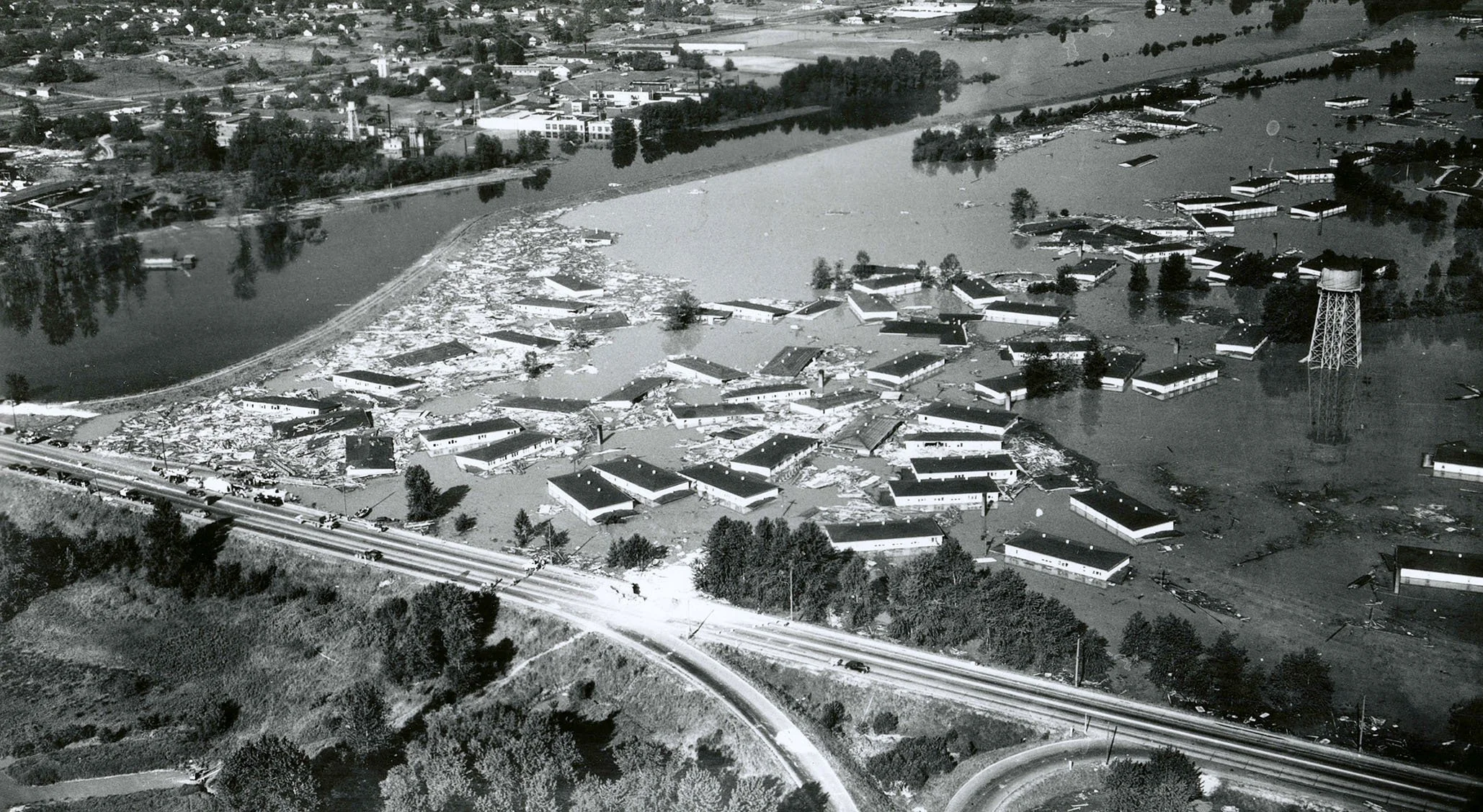
The Vanport Flood of 1948. Oregon History Project.
A fundamental institution that utilized the Elks Lodge space throughout the 1960s was the National Association for the Advancement of Colored People (NAACP). In 1914, the NAACP opened its local chapter in Portland, specifically in the Albina district, which was rooted in aiding the Black community with legal services and fighting for all levels of equality. The already established web of Black organizations provided resources for those affected by the Vanport Flood and the neighborhood, and would become essential in the fight against the redlining of Albina. With the large influx of African Americans arriving throughout the 1940s massively changing the demographic of Portland, the Black community faced a rise of racial discrimination laws that echo the exclusionary nature of the 1857 state constitution, one controlling land and property, and in turn relied on the Albina neighborhood for support and to fight these injustices.
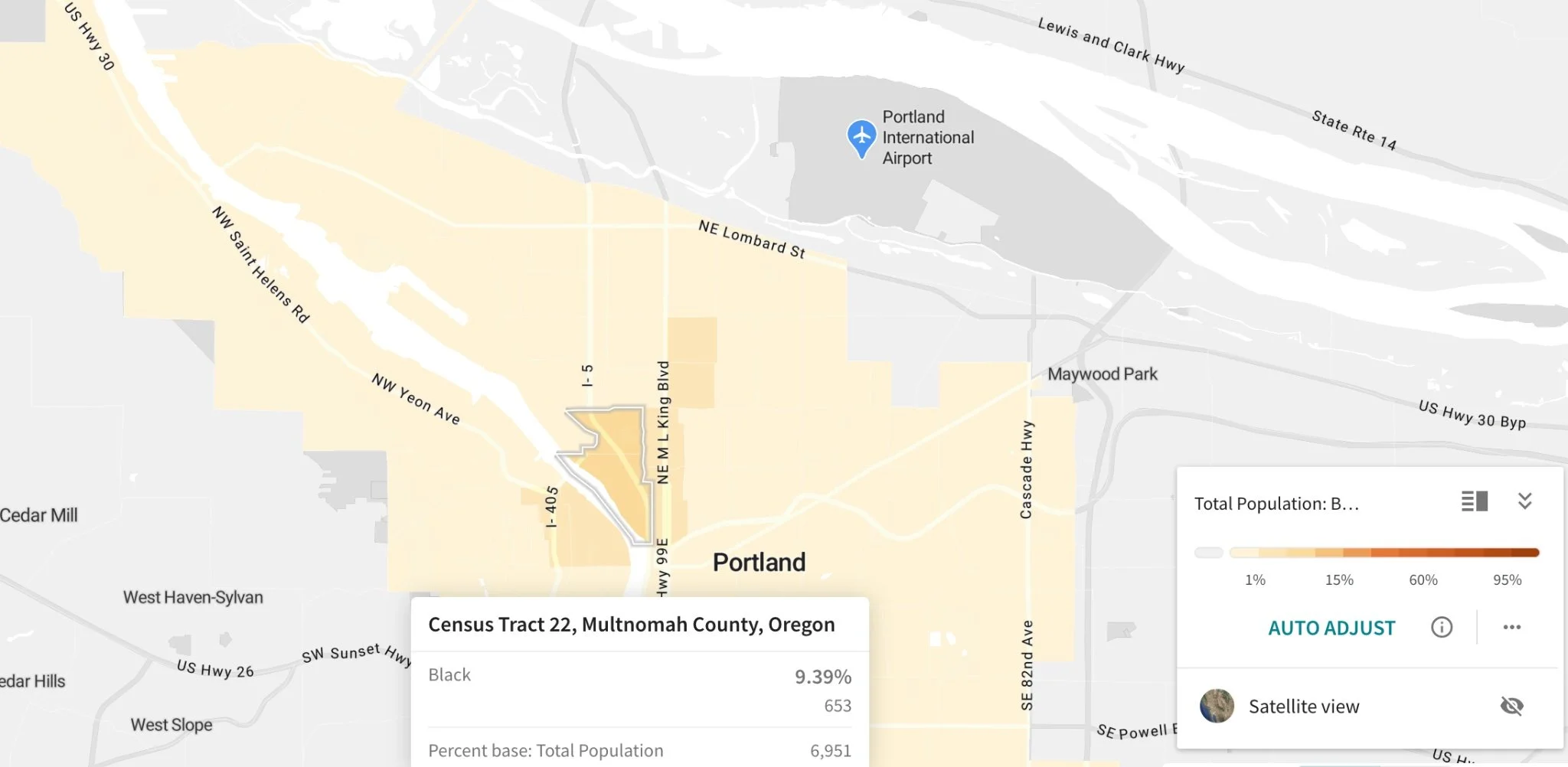
Figure 1, Census data map, highlighting the Black community within Multnomah County and the Albina neighborhood in 1940. Social Explorer.
The rise of the Black community in Portland can be understood through the calls of the Great Migration, a period where thousands of Black families and communities left the South and migrated to the northern industrial cities, and the start of World War II. Before the war, Stuart Pearson, in his journal article “‘A Menace to the Neighborhood’” reports that “Portland’s African American population was relatively small — fewer than 2,000 in 1940...” which can be seen as an echo of the exclusionary laws which banned Black people living in the state entirely. The population size would change within the next year as Mcelderry states that within the two-year span of 1941-1943, somewhere between 15,000 and 20,000 African Americans arrived in the city. As this massive shift in the demographic, with a percentage increase of 900% of the African American population, the change can be seen visually on census data maps. Using the yearly census information that tracks reported race, Figure 1 shows Multnomah County’s small Black community in 1940, coinciding with Pearson’s data, centered around the Albina district. Jumping to 1950 in Figure 2, the massive increase in the population is evident in the darker shaded areas, indicating a higher percentage of African Americans in the area.
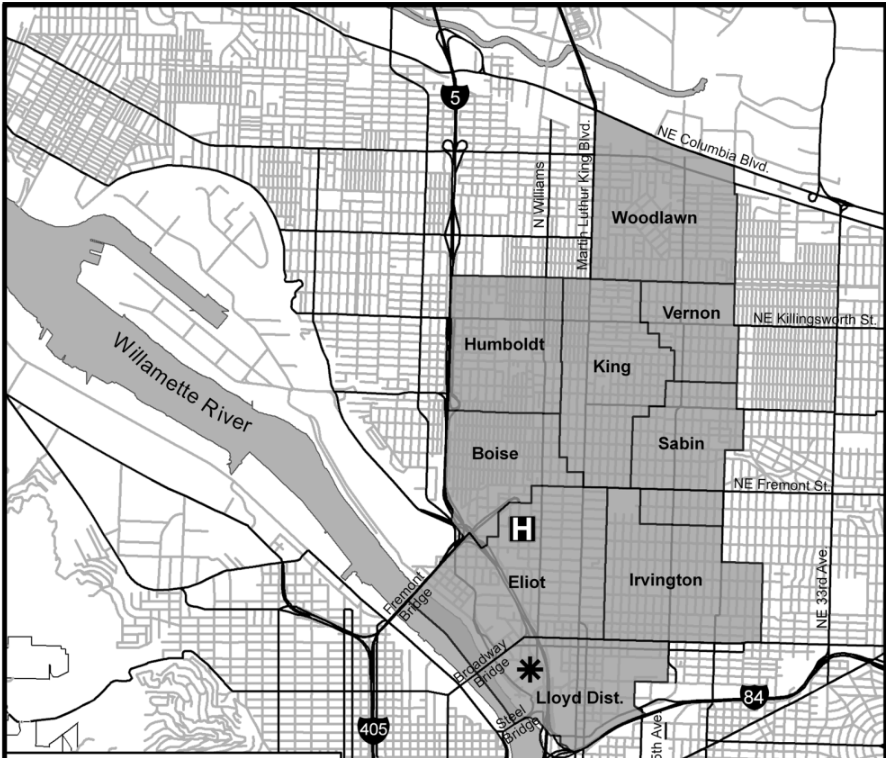
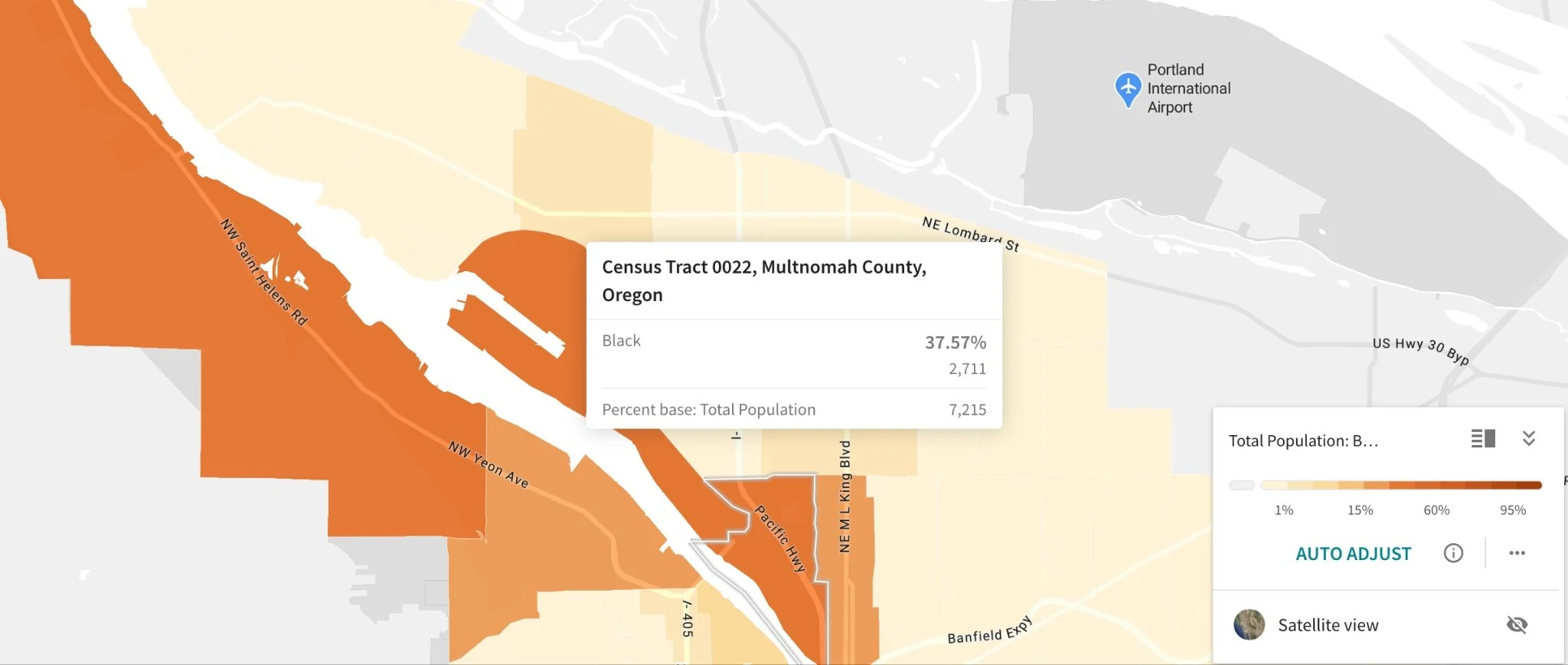
Figure 2, Census data map from 1950, capturing the demographic change after World War II, which brought thousands of African Americans to Portland. Social Explorer.
The Albina District spans a large area in Northeast Portland, encompassing the Woodlawn, Vernon, Sabin, King, Humboldt, Irvington, Boise, Eliot, and Lloyd District neighborhoods. The heart of the Black community was, and is still today, in the Eliot and Boise areas. Research Gate.
The census maps show the population increase within Portland in addition to highlighting where the Black communities were living. As Mcelderry states, the racist housing restrictions of the Portland Realty Board forced African Americans into the Albina neighborhood, which is clear on the data maps. This large influx of new Portland residents was met with white hostility and xenophobia. In 1942, the Oregonian, the state’s most widely read newspaper, wrote “‘Several thousand Negroes have moved into Portland, taxing the housing facilities of the Albina district, center of the city’s colored population…’” describing the Black community as “‘the eastside Negro colony…’” Additionally, a community council in Portland stated that “‘If it is necessary to bring in large numbers of Negro workers, locate them on the edge of the city.’” These racist descriptions and discriminatory motives can be heard as echoes of exclusionary beliefs and practices surrounding the concepts of protecting land and white neighborhoods ingrained within the Oregon landscape.
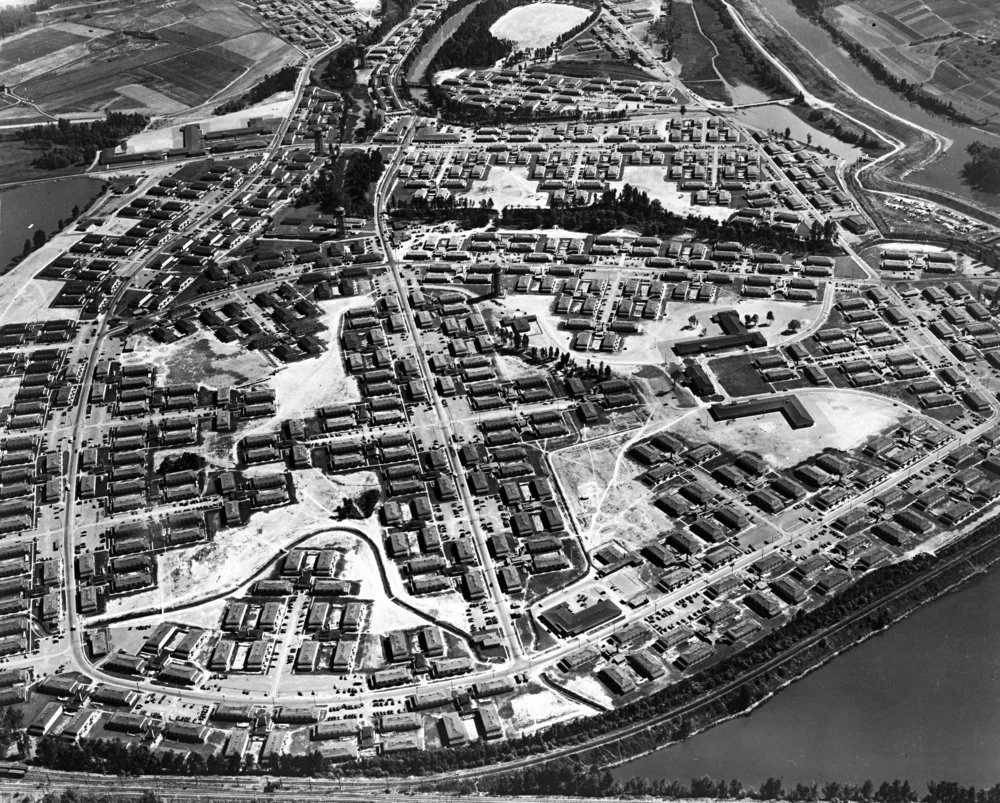
Aerial picture taken of the city of Vanport, colloquially called Kaiserville. Oregon Encyclopedia.
In 1948, the housing crisis became steeper and more prominent as a massive flood on May 31, Memorial Day of the year, wiped out Vanport, leaving over six thousand families homeless and killing 15 people. Continuing the discriminatory acts, the Housing Authority refused to accommodate or provide any housing resources, which left African Americans to find connections and places to stay within Albina.With the devastation of the Flood, the Black community turned to the Albina neighborhood as the majority of social justice organizations and support networks had planted roots in the area. The 1926 Billy Webb Elks Lodge, located on Williams Ave, was originally a segregated YMCA club, which speaks to the narrative of racial discrimination during this time. In the aftermath of the flood in 1948, the building became a resource for Black families, as “a Red Cross emergency center and clearinghouse where relatives separated by the flood could be reunited with their families.” Continuing to serve as a resource for African Americans, the Elks Lodge officially opened in 1959, which created a space for concerts and community organizations to come together.
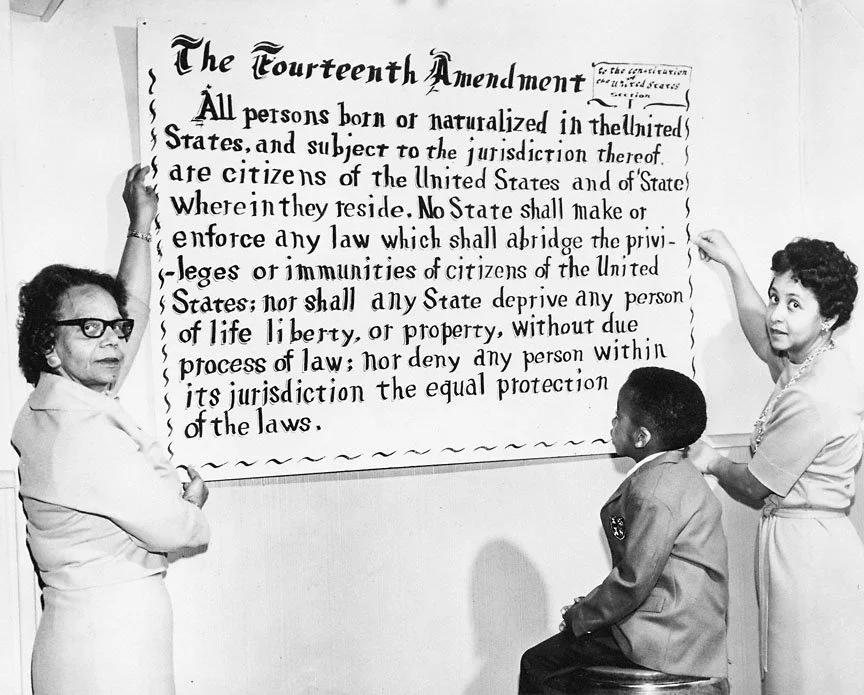
NAACP Portland chapter staff holding a poster displaying the 14th amendment, picture taken in 1964 highlighting the importance and relevance of the amendment in the NAACP’s fight against injustice in the Albina neighborhood. Oregon History Project.
Sources:
[1] Karen J. Gibson, “Bleeding Albina: A History of Community Disinvestment, 1940–2000,” Transforming Anthropology 15, no. 1 (2007): 3–25, 6. [2] Stuart Mcelderry, “Building a West Coast Ghetto : African American Housing in Portland, 1910-1960,” The Pacific Northwest Quarterly 92, no. 3 (2001): 137–148, 137, http://www.jstor.org/stable/40492659.
[3] Rudy Pearson, “‘A Menace to the Neighborhood’: Housing and African Americans in Portland, 1941-1945, Oregon Historical Quarterly, Vol. 102 No. 2, (Summer 2001): 158-171, 161.
[4] [6] Mcelderry, “Building a West Coast Ghetto,” 139.
[5] Lucas N. N. Burke and Judson L. Jeffries, “Making and Remaking Albina: The Long Civil Rights Movement in Portland,” in The Portland Black Panthers: Empowering Albina and Remaking a City, (Seattle: University of Washington Press, 2016), 31.
[6] Mcelderry, “Building a West Coast Ghetto,” 139.
[7] Mcelderry, “Building a West Coast Ghetto,” 139.
[8] Ibid.
[9] Oregon Historical Society, “Vanport,” Accessed July 16, 2026, https://www.ohs.org/museum/exhibits/vanport.cfm.
[10] Burke and Jeffries, “Making and Remaking Albina,” 33.
[11] Michael N. McGregor, “The Vanport Flood,” Oregon History Project, 2003, Accessed July 18, 2026, https://www.oregonhistoryproject.org/articles/essays/the-vanport-flood/.
[12] Gibson, “Bleeding Albina," 10.
[13] Fred Leeson, “Billy Webb Elk Lodge,” the Oregon Encyclopedia, 2022, Accessed July 24, 2026, https://www.oregonencyclopedia.org/articles/billy_webb_elks_lodge/
[14] NAACP Portland Branch, “About Us,” The National Association for the Advancement of Colored People, Accessed July 24, 2026, https://www.pdxnaacp.org/.